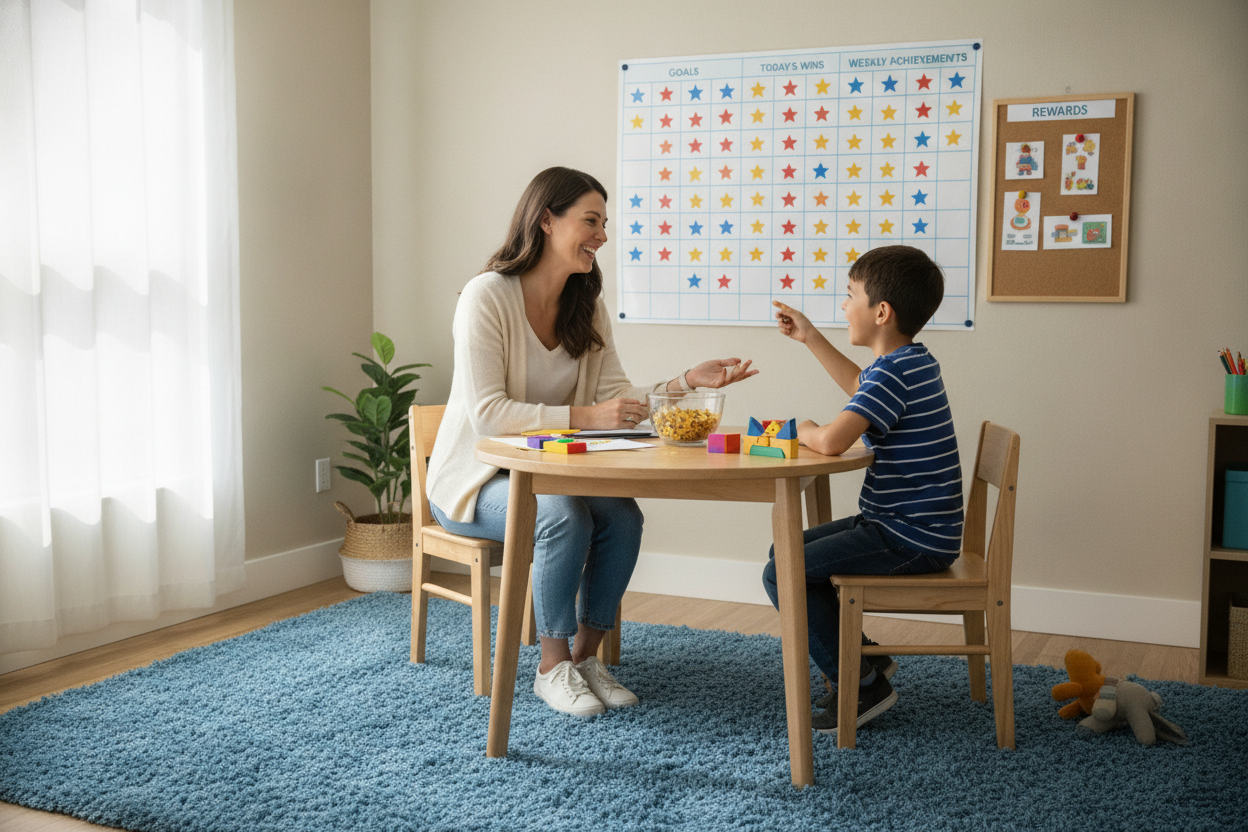
Behaviour Modification
Behaviour modification is a structured therapeutic approach that focuses on identifying and changing maladaptive patterns of behaviour. It is based on scientifically validated principles of learning, including reinforcement, conditioning, and habit formation.
At our centre, we begin with a detailed behavioural assessment to understand triggers, patterns, and maintaining factors. Based on this, individualized intervention plans are developed using techniques such as positive reinforcement, shaping, and behavioural tracking.
This service is especially helpful for children with behavioural concerns, individuals with impulse control difficulties, habit disorders, and those struggling with lifestyle changes. Caregiver and family involvement is often integrated to ensure consistency across environments.
Our goal is to promote sustainable behavioural change, improve self-regulation, and enhance overall functioning in daily life.
12-Session Floor Therapy Plan for Neurodevelopmental Disorders
Session 1 – Building Connection Goal: Establish trust, comfort, and engagement. Activities: Get on the floor, follow the child’s lead. Play peek-a-boo, rolling ball, bubbles. Focus on shared joy.
Session 2 – Shared Attention Goal: Encourage looking, joint focus. Activities: Play with turn-taking toys. Pause and wait for eye contact before continuing. Celebrate small attempts to connect.
Session 3 – Communication Circles Goal: Open & close multiple circles of communication. Activities: Copy child’s sounds/movements. Use exaggerated facial expressions. Encourage back-and-forth interaction.
Session 4 – Emotional Expression Goal: Help child express and recognize emotions. Activities: Play with puppets/dolls showing happy, sad, angry. Mirror child’s emotions. Label feelings during play.
Session 5 – Expanding Play Themes Goal: Encourage imagination & symbolic play. Activities: Pretend cooking, feeding dolls, superhero play. Join child’s play and add new ideas.
Session 6 – Sensory Engagement Goal: Support sensory processing needs. Activities: Sensory bins (sand, rice, water). Swinging, rolling, crawling tunnels. Calming deep pressure games.
Session 7 – Problem Solving Together Goal: Encourage thinking and flexibility. Activities: Build block tower together, solve pretend problems. Obstacle course requiring help. Encourage child’s solutions.
Session 8 – Social Turn-Taking Goal: Practice waiting and sharing. Activities: Board games, ball passing games, turn-taking songs.
Session 9 – Expanding Communication Goal: Move from gestures to words/phrases. Activities: Encourage requests (“more”, “again”). Use choice boards. Model simple phrases.
Session 10 – Emotional Regulation Goal: Teach calming strategies. Activities: Breathing with bubbles. “Turtle game”. Calm-down corner with soft toys.
Session 11 – Group/Peer Play Goal: Practice social interaction with peers or siblings. Activities: Circle games, cooperative building. Role-play simple scripts.
Session 12 – Generalization & Parent Training Goal: Equip parents to continue at home. Activities: Review progress with parents. Demonstrate strategies. Provide home play routine
Structure of Each Session • Warm-up (5 min): Free play, following the child’s lead. • Core activities (20–30 min): Based on the goal of that session. • Cool-down (5 min): Calming play, review, positive closure